Categories
MLB General

August 24 in Sports History: Pete Rose is banned


In 1989: Pete Rose accepted a lifetime ban from baseball from then-Commissioner Bart Giamatti for betting on baseball. Although he vehemently denied gambling, Rose still signed off on the ban. Giamatti, who admitted that the decision took an awful toll on his health, died shortly afterwards. Rose, who holds the all-time career hits mark with 4,256, was also declared ineligible for the Hall of Fame. In 2004, he finally admitted to not only betting on baseball, but also on the Reds, the team he was managing at the time. In his book, “My Prison Without Bars,” Rose told current Commissioner Bud Selig that he bet because he “didn’t think he’d get caught.” No player ever declared permanently ineligible has ever been reinstated into baseball.

In 1951: Nobody could pull a PR stunt like St. Louis Browns’ owner Bill Veeck. In a game against the A’s, Veeck held “Grandstand Managers Day“, in which fans made the final decisions for the Browns. Coaches held up placards, and fans would vote yes or no. The 1,100 plus “skippers” apparently made the right ones, as a few of the players they elected to play helped the Browns defeat the A’s 5-3. They also told players when to bunt, steal, and when to change pitchers. www.baseballreliquary.org

Categories
New York Yankees

August 23 in Sports History: Ruth jacks em one last time


In 1942: While it is known that Babe Ruth hit his final three home runs in Pittsburgh’s Forbes Field, it wasn’t the last time he thrilled fans with a few long balls. Batting against fellow Hall of Famer and legendary pitcher Walter Johnson, Ruth hit two into the stands to thrill the Yankee Stadium crowd one more time. The at-bats were part of pre-game festivities for charity; and Ruth, Johnson and 69,000 fans helped contribute $80,000 for Army-Navy relief during the war. The Yankees and Senators then split a doubleheader.

In 2005 (on August 20): San Francisco 49er’s offensive lineman Thomas Herrion collapsed and died in the locker room following a preseason game in Denver against the Broncos. The 330-pound rookie from Utah was on the field for the 49ers final drive of the game (14 plays), and was administered oxygen immediately afterward. During a team prayer in the locker room, Herrion slumped over and was immediately given first-aid. He was pronounced dead three hours later. An autopsy later determined that the cause of death was heart disease. He was 23.

Categories
San Francisco Giants

August 22 in Sports History: Baseball’s ugliest brawl


In 1965: The ugliest brawl in baseball history took place at Candlestick Park in a game between the San Francisco Giants and Los Angeles Dodgers. Upset that Dodgers’ pitcher Sandy Koufax would not retaliate against Giants’ pitcher Juan Marichal for hitting two Dodgers, catcher John Roseboro took matters into his own hands. When Marichal stepped to the plate, Roseboro threw the ball back to Koufax by barely missing Marichal’s head. Marichal said something, and a 14-minute melee ensued when Marichal hit Roseboro on the head with the bat. Roseboro needed 14 stitches to close the wound. Marichal, one of the best pitchers of the sixties, was suspended eight games and fined a then-record $1750. The brawl also cost him election into the Hall of Fame on his first two ballots. Check out this story for more.

In 2000: At Coors Field, Colorado Rockies’ catcher Brett Mayne became just the third position player in history to win a game on the mound. Having already used an NL record 10 pitchers, the Rockies sent Mayne to the mound, and he worked a scoreless 11th inning. He got the win when the Rockies scored in the bottom of the inning to beat the Atlanta Braves 7-6. Also, in San Diego, Derek “Operation Shutdown” Bell of the Mets mopped up on the mound in a 16-1 loss to the Padres. He didn’t fare as well, giving up three hits, three walks and four earned runs. (baseballlibrary.com)

Categories
MLB General

August 18th in Sports History: Cheating in Little League


In 2001: “12-year-old” Danny Almonte of the Bronx pitched a perfect game against Apopka, FL in the Little League World Series. Almonte’s team, however, would be stripped of their victories when it was found out that the star pitcher and other players on his team were too old to be participating in the games. Almonte went on to become a top prospect in high school (although he went undrafted) and in 2005 married a 30-year old hairdresser.

In 1967: Almost 47 years to the day Ray Chapman was killed by a bean ball, Boston Red Sox outfielder Tony Conigliaro was severely injured when he was struck on the cheekbone with a fastball by Jack Hamilton of the California Angels at Fenway Park. Tony C., one of the most popular Red Sox of the sixties, would miss the rest of the 1967 season and all of the 1968 season due to loss of vision. The 1964 Rookie of the Year was a talented player who was often beset by injuries throughout his career. He was named Comeback Player of the Year in 1969, but never really recovered from the beaning and retired early in 1971 and made an abbreviated comeback attempt in 1975. He suffered a massive heart attack in 1982 and died in 1990 at the age of 45. Many New Englanders (where Conigliaro was from) blamed his hard luck story on the Curse of the Bambino that supposedly befell the Red Sox for decades. baseballlibrary.com

Today’s Birthdays: Roberto Clemente was born on this day in 1934 in Puerto Rico and RJ Warner was born sometime during a rowdy bicentennial celebration in Pittsburgh.

Categories
Cleveland Indians

August 17 in Sports History


In 1920: Ray Chapman of the Cleveland Indians died from being hit by a pitch in a game against the New York Yankees at the Polo Grounds the day before. Crowding the plate as usual, the popular shortstop was struck in the temple (players did not start wearing helmets until the 1950’s) by a fastball from submariner (a distinct sidearm pitching style) Carl Mays. Chapman never regained consciousness and died 12 hours later. It was the only on-field fatality in Major League history. Baseball historians have suggested that in terms of popularity, Chapman’s death would be the modern equivalent of a player like Derek Jeter being killed on the field. Joe Sewell would replace Chapman in the lineup and would go on to have a Hall of Fame career himself. The Indians would rally, however, and win their first World Series in October.

Categories
MLB General

August 16 in Sports History: Sports Illustrated first issue


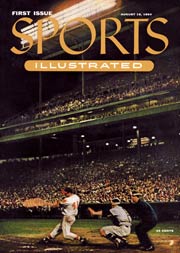
In 1954: Sports Illustrated appeared on newsstands for the first time. The first issue was titled “Night Baseball” and it featured Milwaukee Braves slugger Eddie Mathews on the cover. There were 146 pages and it also featured trading cards of baseball All-Stars including Jackie Robinson, Willie Mays and Ted Williams. The first swimsuit model would appear on the cover two weeks later. Many subsequent issues in those early days featured yachting, hunting, golf and rodeo.

In 1948: Baseball legend and Hall of Fame slugger Babe Ruth died at the age of 53 of throat cancer. Ruth is considered by many the greatest player of all time. The one-time orphan hit 714 career home runs, fashioned a .342 lifetime average, was a dominant pitcher early in his career and reached almost mythical status worldwide. His body would lay in state at Yankee Stadium for the next two days, and more than 100,000 people passed by to pay their respects.

Categories
MLB General

August 15 in Sports History: The Other Babe Ruth


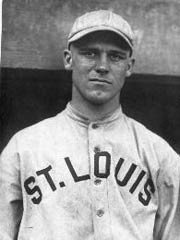
In 1915: George Sisler of the St. Louis Browns pitched a complete game, but lost 1-0 to the Cleveland Indians. Sisler came into the big leagues as a promising young pitcher in 1915. He won five games, including two against Walter Johnson. Much like Babe Ruth, however, his bat was too good to keep out of the weak Browns’ lineup, and he was converted into a first baseman. He hit .340 for his career (including over .400 twice), held the record for hits in a season with 257 (broken by Ichiro in 2004), and was elected to the Hall of Fame in 1939.

In 1993: Paul Azinger won the PGA Championship at Inverness Club in Ohio with a 272. Azinger defeated Greg Norman, who once again failed to capture a major on U.S. soil, in a sudden-death playoff. After helping the U.S. win the Ryder Cup, Azinger would be diagnosed with cancer. He returned to golf quickly, but didn’t win again until 2000 in Hawaii.

Categories
MLB General

August 12 in Sports History: MLB goes on strike


On August 12, 1994: Major League baseball players went on strike. The collective bargaining agreement had expired, and the owners and players were miles apart on the issue of a salary cap, revenue sharing (why Bud Selig didn’t just show the players an NFL logo) and the owners withholding $7.8 million pension payment to the players . The strike would last 209 days and over 900 games would be washed out. Worst of all, the World Series went uncontested for the first time since 1904. It was the fourth work stoppage in 23 years, and it wiped out a possible record-setting season by Ken Griffey Jr. (41 home runs), a triple crown-type year for Jeff Bagwell (.368/39/116) and a possible .400 season for Tony Gwynn . The biggest losers might have been the Montreal Expos, who had a comfortable division lead over the Atlanta Braves and were considered a World Series contender. They haven’t had a winning season since, and moved to Washington in 2005.

Categories
Los Angeles Dodgers

August 10 in Sports History: Have you see my baseball?


In 1995: One of the worst ideas for a promotion (right behind Disco Demolition Night and 10-Cent Beer Night) took place at Dodger Stadium. The Dodgers thought it would be a good idea to hand out free baseballs to all fans, but didn’t follow one of the golden rules of promotions:

“Don’t give away anything the fans can throw on the field and possibly kill someone”

The Dodgers failed to listen, and fans repeatedly tossed hundreds of baseballs onto the playing field after disagreeing with a few umpiring calls and Dodger ejections during a game against the St. Louis Cardinals. After the third time the umpires stopped play, crew chief Jim Quick felt he had no choice but to forfeit the game to the Cardinals in the ninth inning, 2-1. The Dodgers protested, but the N.L. upheld the forfeit the following day. Another umpire blamed L.A. manager Tommy Lasorda for inciting the crowd, saying, “Lasorda instigated the whole damn thing by waving his fat little arms out there.” link

Categories
NHL General

August 9 in Sports History: Great One sold to the Kings


In 1988: In a move that shocked the hockey world, Wayne Gretzky was traded from the Edmonton Oilers (where he had just recently won his fourth Stanley Cup), to the Los Angeles Kings. Gretzky, along with Marty McSorley and Mike Krushelnyski, came to L.A. in exchange for Jimmy Carson, Martin Gelinas, three first-round draft picks and cash (it was rumored that Edmonton was in serious financial trouble). It was arguably the biggest trade in sports history. Gretzky’s arrival in Tinseltown signified an increase (albeit temporarily) in the NHL’s popularity, as teams began popping up in non-traditional markets such as Anaheim, San Jose, Florida and Nashville. Two years after the trade, however, the Oilers got the last laugh by winning the Cup without the Great One in 1990. Gretzky’s Kings reached the Finals in 1993, but lost to the Montreal Canadiens. He retired in 1999 as the NHL’s all-time leading scorer by more than 1,000 points.

In 1975: Almost 30 years to the day it was nearly destroyed by Hurricane Katrina, the New Orleans Saints played their first-ever game in the Louisiana Superdome. The Saints lost the exhibition game to the Houston Oilers, 13-7. After not playing there the entire 2005 season because of the damage, the Saints plan on returning in 2006.