Categories
MLB General

July 5 in Sports History: Breaking the AL color barrier

In 1947: Larry Doby of the Cleveland Indians becomes the first black player to appear in the American League. Doby would join the Indians almost four months after Jackie Robinson of the Brooklyn Dodgers broke baseball’s color barrier. Doby was only a part-time player in his rookie season, but would go on to have a solid career with the Indians, White Sox and Tigers, hitting .283 lifetime with seven straight all-star game invites and two World Series appearances in 1948 and 1954.

In 1946: Two gentlemen named Jacques Helm and Louis Reard helped create what they called “four triangles of nothing.” Spring Break. Senior Week, Sports Illustrated and trips to my apartment complex pool would finally become interesting as the bikini was unveiled on a Paris runway; and it caught on in America shortly afterward. While the two-piece bathing suit had been around for centuries, it took Helm’s design and Reard’s marketing genius (as in,” lets get that thing on a model and show it off”) to help make the bikini what it is today.

In 1980: Sweden’s Bjorn Borg defeated American John McEnroe in the men’s final at Wimbledon in perhaps the most memorable and dramatic finals in tennis history (although we rank the one where Pete Sampras vomited and any of the combined 564 career professional appearances of Maria Sharapova and Anna Kournikova as personal favorites). The match not only see-sawed for five sets, it also featured a dramatic, 34-point tiebreaker in the fourth set won by McEnroe, 18-16. Borg, however, got the last laugh in the fifth, winning 8-6 and capturing a record fifth consecutive Wimbledon men’s singles title.

Categories
Soccer

June 29 in Sports History: US Soccer team shocks England

In 1950: On the day the United States decided to enter into the Korean conflict, an unheralded team made up of dishwashers, mailmen and hearse drivers pulled off one of the greatest upsets in sports history. The United States soccer team defeated mighty England, 1-0 in a World Cup match in Belo Horizonte, Brazil. Having been outscored 45-2 in matches leading up to the Cup and following a 3-1 loss to Spain in their first match in group play, the Americans scored on a header by Joe Gaetjens (the dishwasher) in the 37th minute for a 1-0 lead. The British, 3 to 1 favorites to win the cup and the undisputed best team in the world (and resting their best player), could not beat goalkeeper Frank Borghi (the hearse driver) and the 500 to 1 shot United States pulled the shocker in front of a grand total of one American media member (a St. Louis sports writer who was vacationing in Brazil). The United States could not carry the momentum into the next match and bowed out of the World Cup with a 5-2 loss to Chile three days later. They would not win another match until 1994. A book called The Game of Their Lives and a movie of the same name tells the entire story of one of sports most shocking upsets.

Categories
Boxing

June 28th in Sports History: Dinner with Tyson

In 1997: Blogging was invented! No, we can’t quite verify that, but the possible reason for the creation of sports blogging could have been this moment: Mike Tyson bit off a chunk of Evander Holyfield’s ear in the boxing ring! (You can’t write or say that without exclaiming it). In a pay-per-view rematch of their bout the previous November (won by Holyfield), the two fought into the third round. There appeared to be a lot of hugging and holding in the middle of the ring; but in truth, Tyson was gnawing into Holyfield‘s right ear. Referee Mills Lane penalized Tyson two points and let the match continue; Tyson then went for the left ear, and was disqualified immediately as he spit the chunk into the ring (it was later found and surgically repaired). Tyson claims that Holyfield was intentionally head-butting him. An absolute melee ensued, and the violence spread from the ring into the MGM Grand Casino, where shots were fired. Tyson was fined three million dollars and had his boxing license revoked by the Nevada Athletic Commission.

Categories
Boxing

June 27 in Sports History: Spinks gets $10M for 91 seconds


91 seconds of work

In 1988: Mike Tyson knocked out previously undefeated Michael Spinks in 91 seconds at the Trump Plaza in Atlantic City. The fight, which was hyped for months as the true test to Tyson’s dominance, was over before many people even got to their $1,500 ringside seats. It was the fourth shortest heavyweight fight in history and was believed to be the climax of Tyson’s career as the undisputed heavyweight champion. The fight was so short, HBO was able to show a slow motion replay of the entire bout. Spinks collected about ten million dollars for his troubles.

In 1999 The Seattle Mariners played their final game in the Seattle Kingdome in front of 56,000 fans. Ken Griffey Jr. homered for the Mariners in the 5-2 win over the Texas Rangers. The Mariners played over 1,700 games in 22 seasons at the Kingdome. A few memorable moments include Griffey Jr. and his father, Ken Sr. both playing in the same game together, the Mariners one-game playoff win over the Angels to clinch the AL West in 1995, and Junior scoring the winning run of the first ALDS in the bottom of the 10th inning in Game 5 against the Yankees. Fans and city officials celebrated the final game at the Kingdome with banners and ceremonies, prompting sportscaster Keith Olbermann to wonder: “Why? It was a dump.

Categories
St. Louis Cardinals

June 26 in Sports History: Cardinals Jimenez pitches no-hitter

In 1999: Jose Jimenez of the St. Louis Cardinals pitched one of the most unlikeliest no-hitters in baseball history. Jimenez out dueled Randy Johnson of the Arizona Diamondbacks for a 1-0 victory at Bank One Ballpark in Phoenix. He walked two and hit a batter while Johnson also pitched a complete game and gave up a broken-bat infield single for the Cards’ only run. In his only year as a starter, the 26-year old Jimenez was just 5-14 with a 5.85 ERA (he did once have 41 saves in a season with the Rockies) and would finish with a 24-44 career record.

In 1985 It was one of those moments that you just wish you were there. In a Class A Florida League game, Umpire Keith O’Connor threw someone out of the game for objecting to a call he had just made. Funny thing was, it was the organist, Wilbur Snapp, who got tossed. After a bad call, Snapp thought it would be funny to play “Three Blind Mice,” but the umpire did not find it amusing. O’Connor walked up to the backstop screen, pointed directly at Snapp and ejected him from the game. The story broke nationally, and Snapp (who died in 2003) claimed that a single day didn’t go by without somebody asking him to play “Three Blind Mice.”

Categories
Kansas City Royals

June 21 in Sports History: Swing like Bo Jax

In 1986: Bo Jackson became the last celebrated player to willingly sign with the Kansas City Royals. Jackson, a two-sport star and Heisman Trophy winner out of Auburn, was drafted first overall by the Tampa Bay Buccaneers in April. Not wanting to play for the sad-sack Bucs, he opted to play minor league baseball instead. He would play 25 games for the Royals in 1986 and join the Los Angeles Raiders in 1987 as a hobby (his words). Jackson would star with both the Royals (he started in centerfield in the 1989 all-star game and homered) and Raiders until a serious hip injury in a 1991 playoff game with the Raiders would end his football career. He attempted a comeback in 1992 with the Chicago White Sox and retired for good in 1994. Many consider Jackson to be the greatest athlete of his generation.

Categories
Golf

June 20 in Sports History: Payne Stewarts final major win

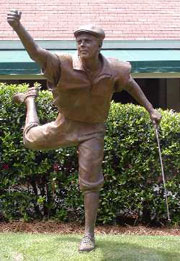
In 1999: Payne Stewart sinks a dramatic 25-foot par putt to win the U.S Open at Pinehurst no. 2 in North Carolina. On a misty Sunday afternoon, Stewart held off Phil Mickelson and Tiger Woods with a one-under 279. Stewart’s putt capped off one of the most memorable finishes in golf history. Mickelson, who had been up one with three to play, now needed to make par to force a playoff, but bogeyed the 72nd hole. Stewart leaned forward, pumped his fist in the air and kicked his right leg back in celebration as the putt disappeared into the hole for his second national golf championship. Sadly, it would turn out to be Stewart’s last hurrah, as he tragically died in a plane crash later that year. His winning moment was immortalized in a statue at Pinehurst.

In 1982 Tom Watson defeats Jack Nicklaus with a stunning birdie chip on the 17th hole at the U.S. Open at Pebble Beach. Watson, always known for coming close but not winning the U.S. Open, was tied for the lead with Nicklaus going into 17. With Nicklaus safely on the green and Watson in the rough, it looked liked the Golden Bear was in the driver’s seat for his fifth Open title. A confident Watson felt that he could make it and rolled the chip in for a birdie and a one-shot lead. He then birdied 18 to take his first and only national title by two strokes.

Categories
NHL General

June 19 in Sports History: Sabres get screwed


In the crease

In 1999: Brett Hull of the Dallas Stars scored the most controversial goal in NHL history. Hull whacked home a rebound on his third try past a sprawled Dominik Hasek in triple overtime. The goal clinched Dallas’s first ever Stanley Cup with a 2-1 victory over the Buffalo Sabres. According to NHL rules at the time, any goal scored with so much as an opposing skate lace in the crease would be disallowed. Video replays showed Hull’s entire left leg was in the offending area as the puck left the crease. The goal stood, and the Stars lifted the Cup, while Buffalo’s championship nightmares continued. The rule was changed the following season.

In 1943: The most bizarre franchise in NFL history was created. Due to a shortage of players during World War II, the Pittsburgh Steelers and Philadelphia Eagles merged their football teams to create the Steagles (which was an unofficial name). The teams split their home games between Pittsburgh and Philadelphia, were co-coached by Greasy Neale of the Eagles and Walt Keisling of the Steelers and finished 5-4-1. The marriage would only last one season, with the Eagles keeping their own team in Philadelphia and the Steelers merging with the Chicago Cardinals as Card-Pitt in 1944 (they were jokingly called the Carpets – because teams walked all over them). They went 0-10 before returning as the Steelers after the war.

Categories
Chicago Bulls

June 16 in Sports History: Jordan comes back to lead the Bulls

In 1996: The Chicago Bulls won their fourth NBA championship in six years by defeating the Seattle Supersonics 87-75 to win the series 4-2. Jordan won his record fourth Finals MVP (he would capture all six) on a bittersweet day. The game was played on Father’s Day, and Jordan’s father James had been murdered in North Carolina three years earlier. The most memorable scene was Jordan collapsing to the locker room, overcome with emotion.

The 1995-96 Bulls were considered one of the greatest teams in NBA history. In Jordan’s first full season back since his first retirement (he played less than half of the ‘95 season), Chicago finished with a 72-10 regular season record followed by a 15-3 playoff record. They swept the Heat in the first round, knocked off the Knicks in five games, swept the Magic in the conference finals and took out the Sonics in six. (nba.com)

In 1974: Hale Irwin won the U.S. Open at Winged Foot, the site of this year’s tournament. Irwin took the Open with a seven over par 287, which was the second highest winning score of the last half of the century. The course was brutal, and many believed it was the hardest U.S. Open ever. Some even called it the “Massacre at Winged Foot.” Jay Haas was the “low” amateur at a mind-boggling +28. The course played 6,961 yards in 1974; it is over 7,200 this year, so look out for some high scores. (golfchannel.com)

Categories
Golf

June 15 in sports history: Jack Nicklaus sets a record


sweet pants

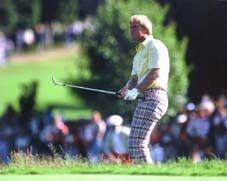
In 1980: Jack Nicklaus shot a 72 hole record-low total of 272 (since tied three times) at Baltusrol GC in New Jersey to win his fourth U.S. Open. The Golden Bear, winner of 18 majors, also set the record for the lowest under par score with at -8 (now owned by Tiger Woods at -12).

In 1901 and 1980: The highest and lowest ever total scores to win a U.S. Open golf championship in the modern era were both established on June 15.

In 1901: Willie Anderson fired a 331 over 72 holes to win the 1901 event in a playoff at the Myopia Hunt Club in Massachusetts. Anderson won a total of four national golf championships, including three in a row from 1903-1905. No word on whether his drinking buddies called him “Flipper.”

In 1938: Johnny Vander Meer of the Cincinnati Reds establishes perhaps the most unbreakable record in baseball as he tosses his second consecutive no-hitter. Vander Meer, who held the Boston Braves hitless four days earlier, struck out seven Brooklyn Dodgers (and walked eight) in a 6-0 Reds victory. The Reds rookie did not give up a hit for 21.2 innings. The game against the Dodgers was also the first night game in Ebbets Field history. Vander Meer, despite his early success, finished with only a 119-121 career record. (baseballalmanac.com)